Website expansion in progress...prototype coming soon.







Digital communication wasn’t built for emotional truth. Until now.
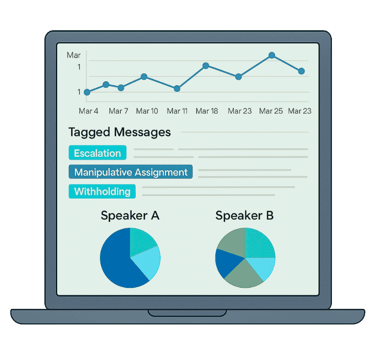
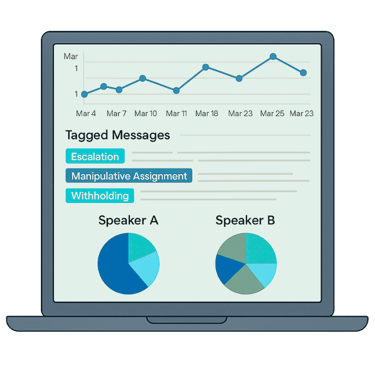
Emotional Pattern Intelligence (EPI) tracks how conversations actually unfold — message by message — to reveal patterns like escalation, control, and failed repair.
Not just what was said.
But what happened between people over time.
The difference isn’t conflict.
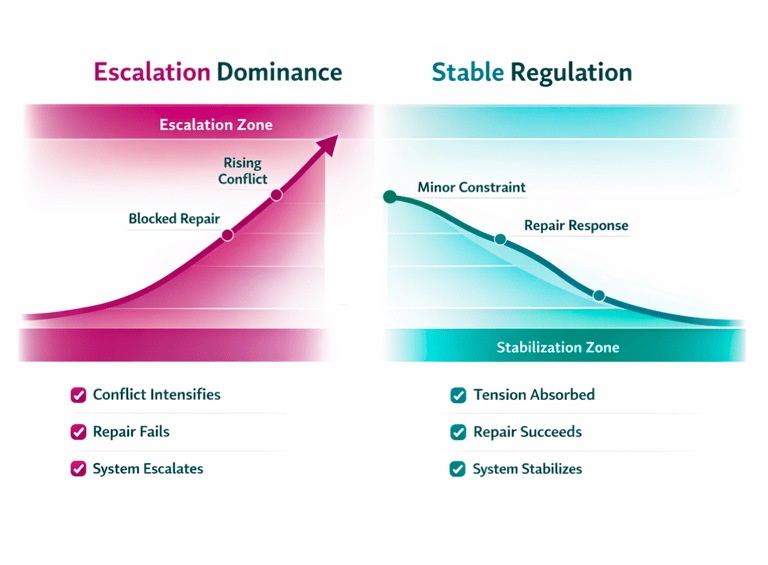
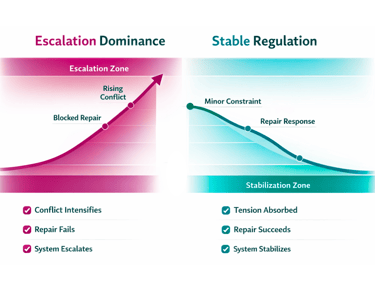
Some conversations stabilize.
Others escalate.
The difference is structural... and now it’s visible.
It’s whether repair works.
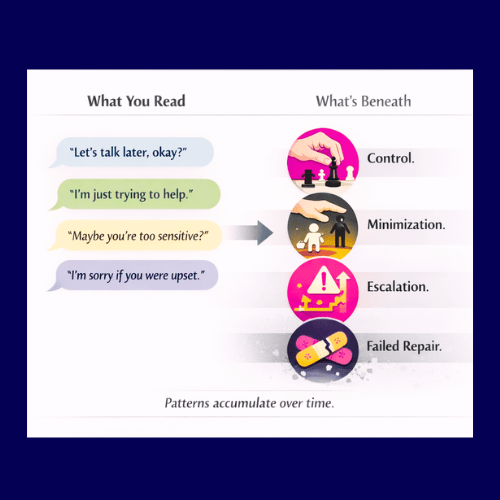
Most harmful communication doesn't look harmful at first.
It often looks polite.
It sounds reasonable.
It reads as normal.
But patterns tell a different story.
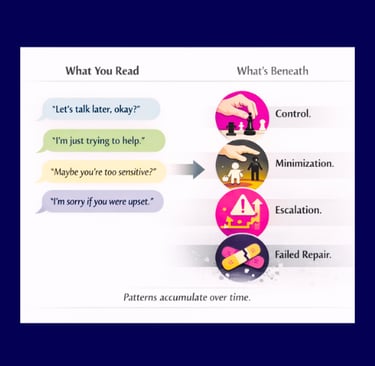
Control.
Minimization.
Escalation.
Failed repair.
These patterns don’t appear all at once.
They accumulate across interactions.
Digital systems preserve messages —
but not what happens between them.
By the time harm is obvious,
the pattern is already established.


A DIFFERENT WAY TO SEE COMMUNICATION
Most tools evaluate messages in isolation.
EPI tracks interaction.
It analyzes how:
tone
responses
and timing
work together across time.
Because risk doesn’t come from a single message.
It emerges from patterns.
How Patterns Form
A single message rarely reveals what’s happening.
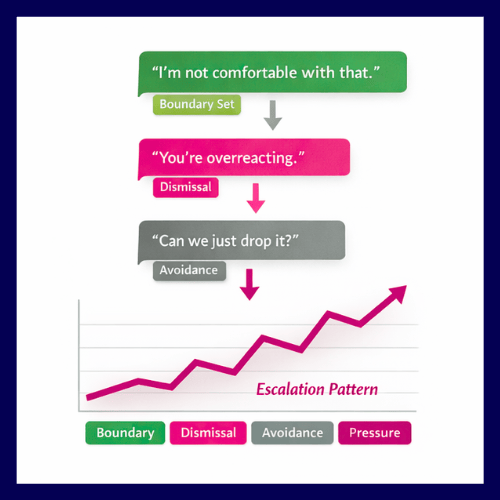
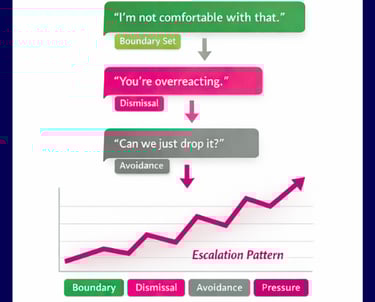
“I’m not comfortable with that.” (boundary)
“You’re overreacting.” (dismissal)
“Can we just drop it?” (avoidance)
“Why are you making this a big deal?” (pressure)
Individually, these messages may seem reasonable.
Together, they form a pattern of escalation.
Patterns emerge through response.
Boundary → Dismissal → Avoidance → Pressure
WHAT EPI ANALYZES
Signals
What is expressed
(support, dismissal, blame, regulation, control)
Responses
What happens next
(repair, escalation, avoidance, boundary violation)
Patterns
What repeats over time
(control loops, breakdown cycles, failed repair)
Together, these layers reveal how communication actually unfolds.
EPI analyzes observable signals only.
It does not infer intent or diagnose individuals.
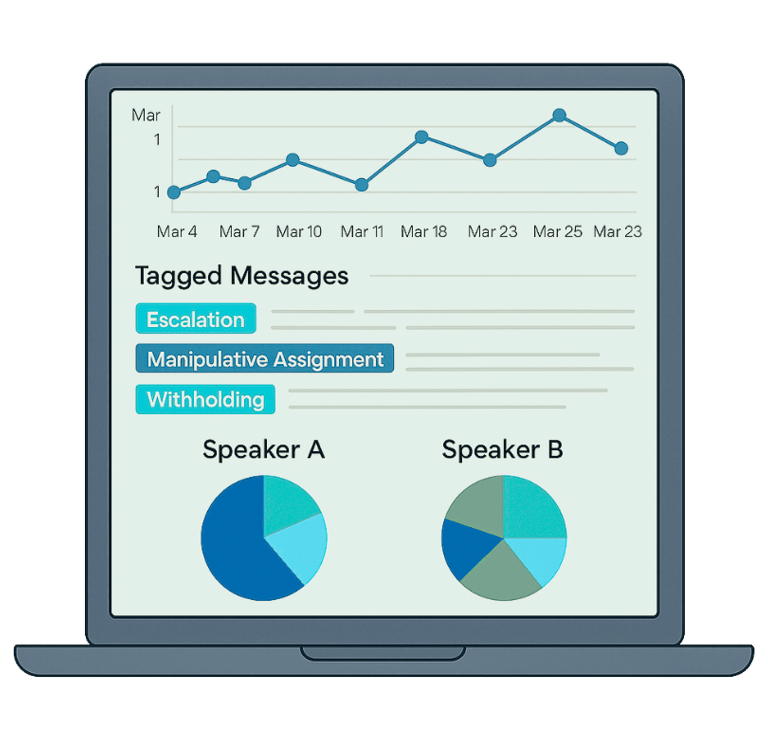
EPI operates across three observable layers within digital communication:
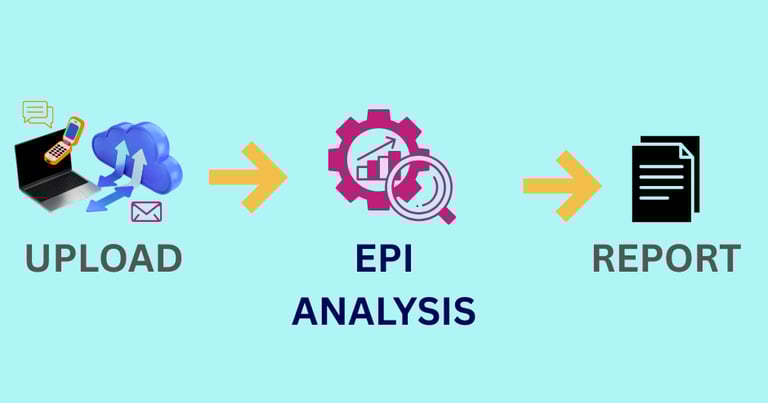
Analyze a conversation.
Get structured insight.
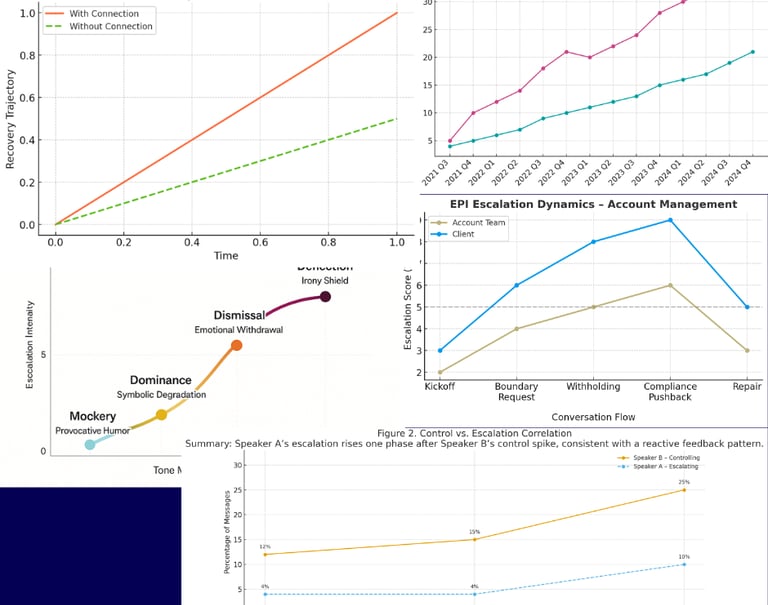
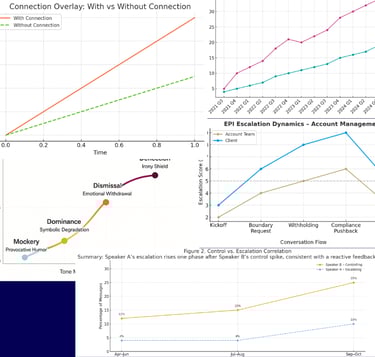
EPI is currently available as an early prototype, allowing users to analyze message threads and surface tone patterns, relational dynamics, and escalation signals.
The next release expands this into a full reporting tool- with structured summaries and downloadable PDF reports designed for professional use.
Current Prototype
Paste a conversation
Identify tone and relational patterns
View early-stage trajectory insights
Next Release (In Progress)
Structured report generation
Escalation stage classification
Downloadable PDF exports
Visual summaries for review and sharing
From Conversation to Clarity
EPI transforms communication into structured evidence designed for professional review.
Outputs include:
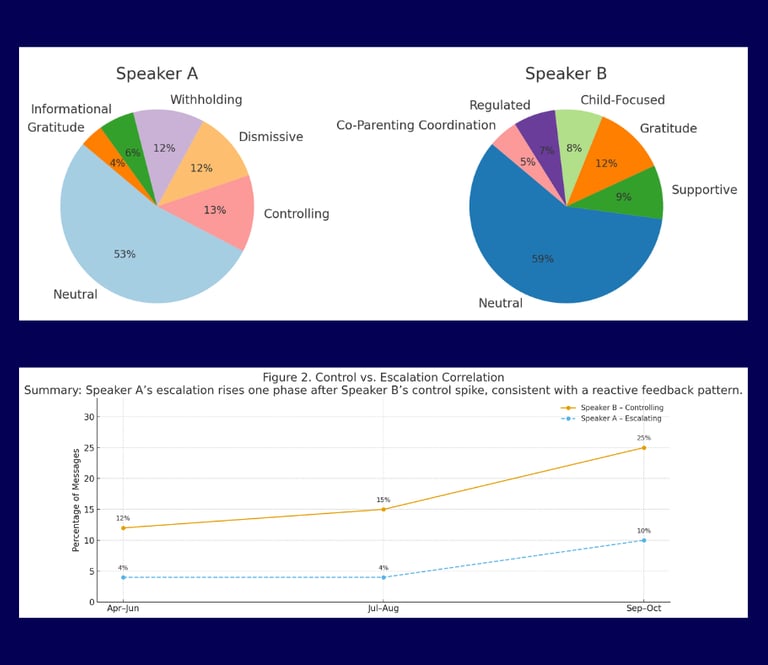
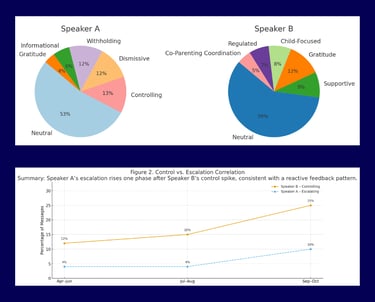
Tone Distribution By Speaker
See how emotional signals differ across participantsRelational Pattern Indicators
Identify control, minimization, boundary violations, repair attempts, and withholdingEscalation Timelines
Track how conversations shift and destabilize over timeStructured Reports
Documentation designed for professional review and defensibility
What used to feel subjective becomes structured.
What was difficult to articulate becomes visible.


WHERE EPI IS APPLIED
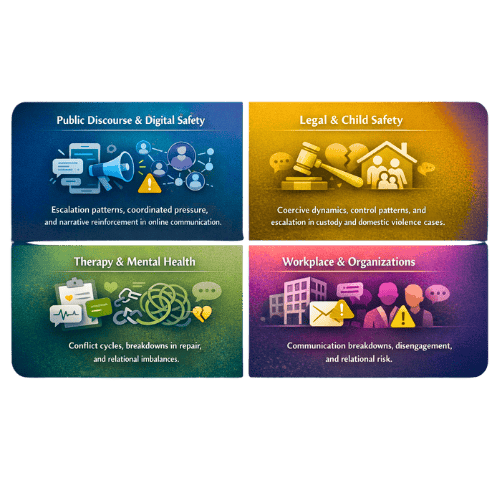
EPI is used in structured review environments where communication patterns shape real outcomes:
Enterprise longitudinal modeling and public literacy tools are in development as infrastructure expands.
Built for Clarity, not Control
Patterns are surfaced- not judged
Evidence is structured- not interpreted
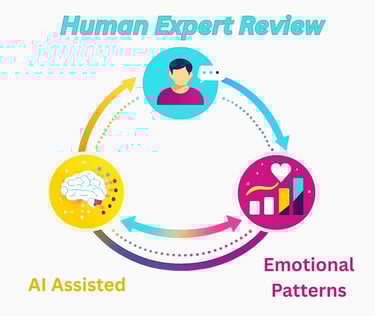
Human review remains central


Where this came from
EPI began as structured documentation of emotional dynamics across real relationships and professional environments- especially where harm was deeply felt but difficult to demonstrate.
What began as pattern documentation became modeling.
What became modeling is now becoming analytical infrastructure.


Learn more about relational systems analysis.
Request a Demo, Pilot Partnership or General Inquiry


Connect
Explore
info@mindfulcommunications.io