
Digital communication wasn’t built for emotional truth. Until now.
Emotional Pattern Intelligence (EPI) is a constraint-aware emotional intelligence visibility framework that reveals how digital communication moves toward escalation or harm over time- so emotional risk can be recognized before harm becomes crisis.


What makes EPI Groundbreaking
Emotional harm builds through repeatable patterns- often shaped by limits of regulation, power and repair long before any single message looks harmful.
The Problem
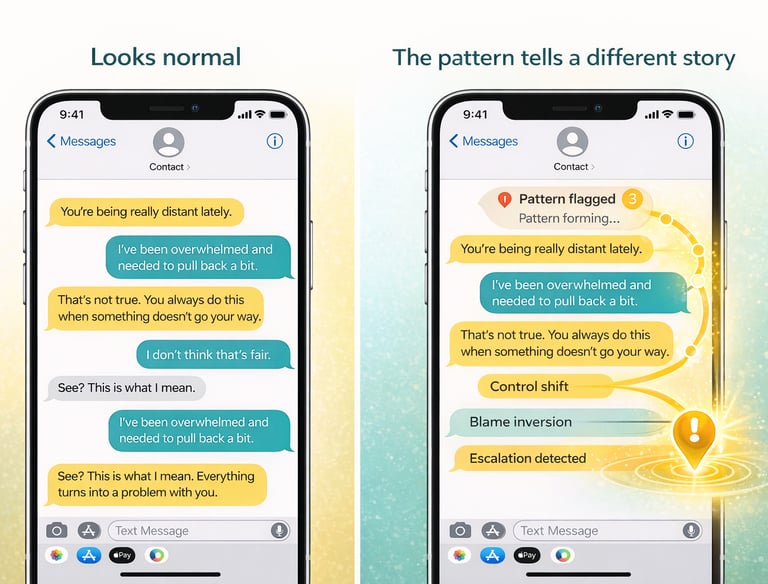
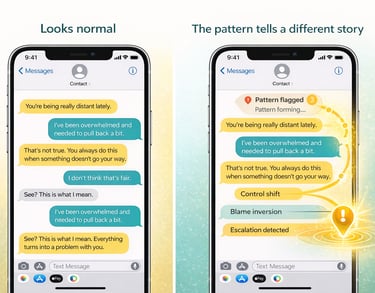
Most harmful communication doesn’t look harmful.
It looks polite.
It looks reasonable.
It often looks completely normal.
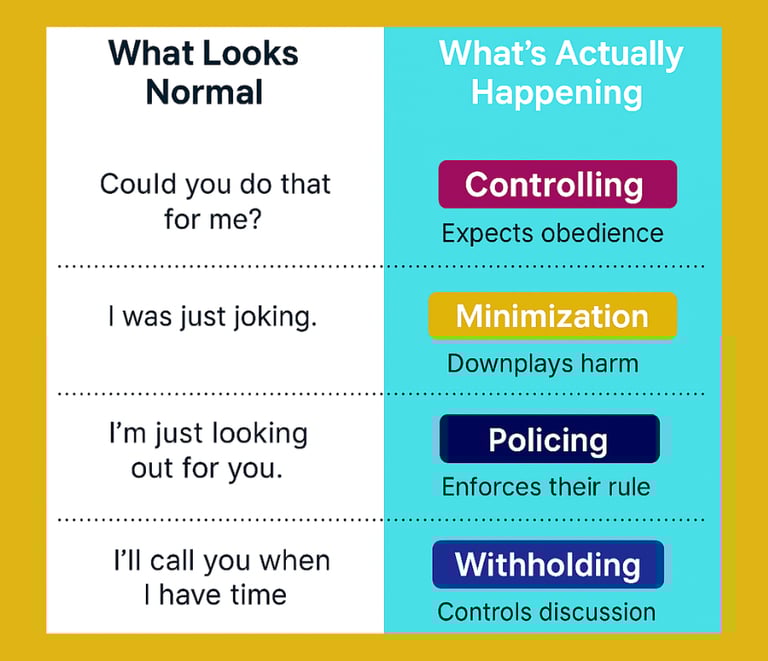
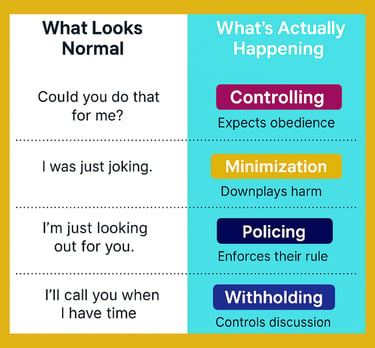
But patterns of control, minimization, withholding, and escalation build quietly over time—hidden inside everyday language.
By the time damage is obvious, the underlying pattern has already crossed a threshold where repair is limited.


WHAT IS EMOTIONAL PATTERN INTELLIGENCE?
It works at three levels:
Tone Signals
Subtle emotional cues inside language- such as support, dismissal, blame, or control.
Relational Dynamics
How people respond to each other- including boundary violations, repair attempts, power imbalances and withholding.
Pattern Trajectories
How interactions evolve- whether they are stabilizing, stuck, or moving toward escalation or harm.
Together, these layers reveal emotional risk before outcomes become extreme.
EPI does not judge intent or diagnose individuals.
It makes repeatable emotional patterns visible so people, professionals, and institutions can respond with clarity and care.
Emotional Pattern Intelligence (EPI) is a constraint-aware emotional intelligence framework for understanding how digital communication unfolds over time.
Rather than evaluating messages in isolation, EPI analyzes communication as a system- where emotional signals, relational responses, and timing interact to shape outcomes.
PROOF IN ACTION
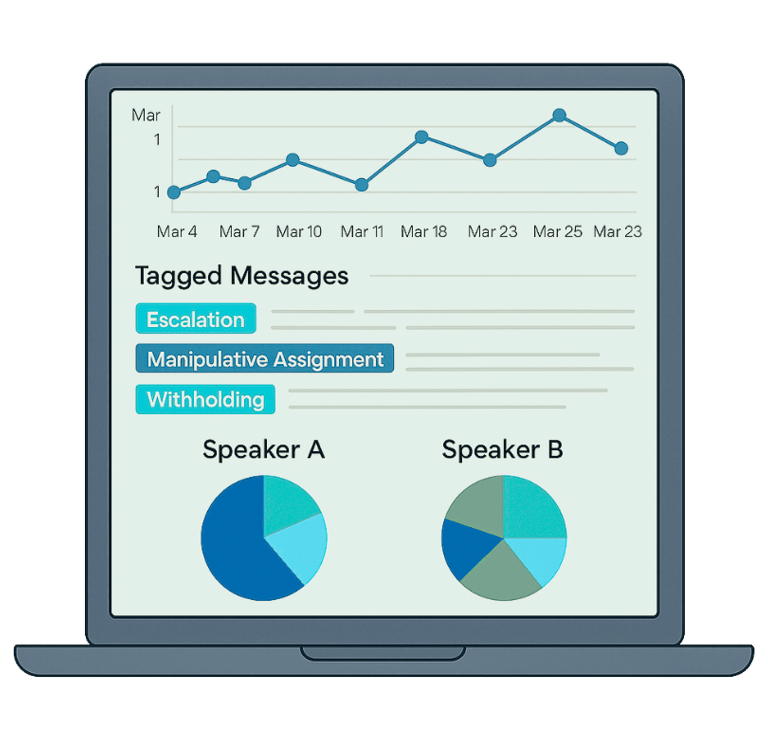
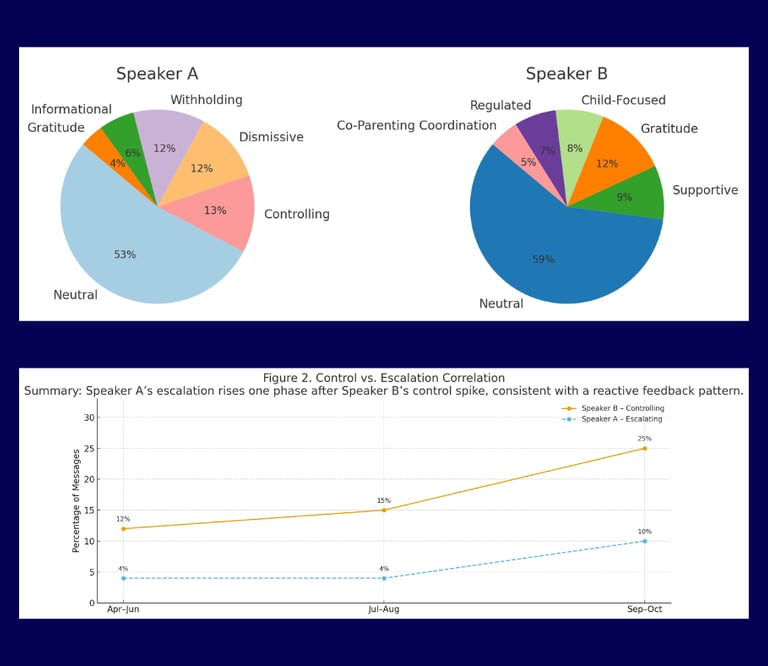
EPI transforms communication into structured evidence designed for human review.
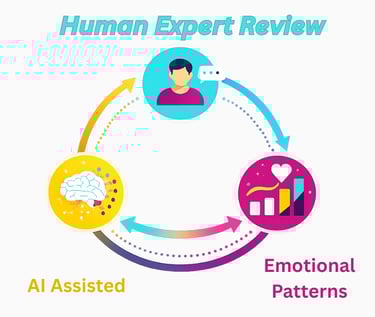
Rather than issuing judgments or labels, the system organizes emotional and relational patterns so they can be seen, examined, and evaluated by people- including clinicians, advocates, attorneys, and decision-makers.
The framework produces:
Tone distribution by speaker
Showing how emotional signals are expressed and received across a conversation—not just in isolated messages.Relational pattern indicators
Highlighting repeatable dynamics such as control, minimization, boundary violations, repair attempts, or withholding.Escalation timelines
Mapping how interactions evolve over time, including points where risk increases or regulation breaks down.Visual summaries and reports
Making complex emotional patterns observable, reviewable, and defensible in professional contexts.
What used to feel subjective becomes structured.
What was invisible becomes discussable.
EPI does not replace human judgment.
It gives humans clearer evidence to work with- especially in situations where emotional harm is difficult to prove but deeply felt.
*Longitudinal analysis is available through supervised pilots, where pattern visibility and human review remain tightly coupled.


WHERE EPI IS USED
Public Discourse & Digital Safety
Tracking escalation and emotional mobilization patterns in online environments where harm often develops in plain sight.


Different settings- same emotional forces.
EPI is designed as emotional safety infrastructure that can adapt across domains:
Legal & Child Safety
Identifying coercive patterns, documenting relational dynamics, and supporting early intervention in custody and domestic violence contexts.
Therapy & Mental Health
Mapping conflict cycles, attachment disruptions, and breakdowns in co-regulation to support clinical insight and repair.
Workplace & Organizations
Detecting communication patterns that predict trust erosion, power imbalance, or breakdown in professional relationships—before performance or safety is compromised
If you’ve seen how emotional harm accumulates through patterns over time, the next question is why existing tools still miss it.
The answer lies in how EPI is built.
Why EPI is Different
Most communication analysis tools rely on keyword scanning or sentiment scores.
They evaluate messages in isolation- asking whether a single message sounds positive or negative.
EPI takes a different approach.
Rather than judging individual messages, EPI models communication as a constrained system- where emotional signals, responses, timing, and power dynamics interact over time.
Instead of asking:
“Is this message bad?”
EPI asks:
“Is this interaction becoming unsafe?”
That shift makes it possible to detect emotional risk before harm becomes visible—because risk emerges from patterns, not moments.


This allows EPI to support professionals in high-stakes contexts- without overreach, diagnosis, or replacement of human judgment.


EPI is built on observed, repeatable emotional dynamics that shape escalation, regulation limits, and repair capacity across real relationships.
For that reason, EPI is designed as infrastructure, not automation:
Patterns are surfaced, not judged
Evidence is structured, not interpreted
Human review remains central
Longitudinal insight is governed, not unleashed
Built from lived patterns. Designed as infrastructure.
EPI began as years of documenting emotional dynamics across real relationships, workplaces, and public communication- especially in contexts where harm was felt but difficult to prove.
What started as lived experience became structure.
What became structure is now becoming technology.
Today, EPI is developed by Mindful Communications as emotional safety infrastructure for the digital world-designed to make patterns visible without judgment, automation, or overreach.
This work is grounded in reality, governed with care, and built to support the people and institutions responsible for protecting others.


Help us make emotional clarity accessible.
Request a Demo, Pilot Partnership or General Inquiry


“I didn’t know how to explain it. But now I can show it.”
- after running a ToneLog on early messages from a partner who kept shifting blame and testing boundaries.
Alex R.


“He always said I was the problem. The ToneLog shows who’s been protecting our child.”
- a mother using EPI in court to document emotional control and safety imbalance
Jamie T.


Connect
Explore
info@mindfulcommunications.io