
The EPI Lens
A Different Way of Reading Digital Communication
Emotional Pattern Intelligence (EPI) functions as a visibility lens—not a diagnostic system and not a decision-maker.
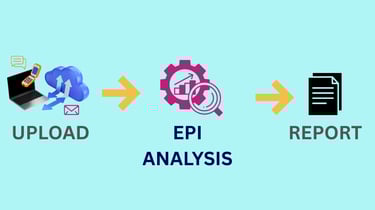
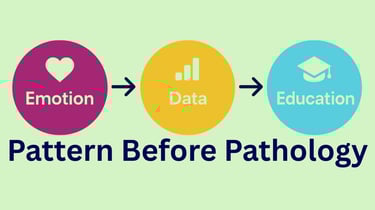
The EPI Lens shows what digital communication looks like when it is read as a system over time, rather than as isolated messages.
Instead of asking whether a single message is “good” or “bad,” the lens reveals how tone, response, and timing interact—shaping clarity, strain, escalation, or repair across an exchange.
This is not a judgment tool.
It is a way of seeing.





What the EPI Lens Reveals
When communication is viewed through the EPI Lens, patterns become visible that are often felt immediately, but difficult to articulate later.
These include:
how emotional tone influences what comes next
whether responses stabilize or increase strain
how responsibility and coordination are handled
where repair is attempted, missed, or avoided
whether an interaction is settling, stuck, or becoming more constrained
What matters is not a single message-
but how messages relate to one another over time.
What You May Notice
As you explore the prototype, you may see:
interactions that support clarity, regulation, and repair
moments of strain that remain polite but unresolved
early directional shifts that narrow options for coordination or repair
EPI surfaces both stabilizing and destabilizing patterns.
Not every signal indicates harm.
Many are simply informative- showing where attention, clarification, or care may be needed.
What This Is Not
The EPI Lens does not:
diagnose individuals
assign intent or blame
predict behavior or outcomes
replace human judgment
Seeing a pattern does not mandate a conclusion.
It supports more responsible interpretation.
The EPI Lens does not tell you what to think.
It shows you what is happening- so you can decide what responsibility looks like next.
How to Use the Lens
The prototype is designed for exploration and reflection.
Use it to:
notice patterns you may have sensed but couldn’t name
reduce guesswork in emotionally complex exchanges
understand where strain or stability is accumulating
consider where earlier clarity or repair might help
Interpretation always belongs to the human reading the output.
One Thing to Keep in Mind
Tone acts. Patterns form. Trajectories emerge.
Seeing them early creates the possibility of prevention.


Ready to Look?
The prototype below lets you view short, two-sided message sequences through the EPI Lens.
Before you begin, you may want to review the Output Key (below), which explains how to read the results once they appear.
How to Read This Output
A Guide to Interpreting EPI Results Responsibly
The information below reflects structured visibility, not a conclusion.
EPI organizes emotional tone and relational patterns across time so they can be examined more clearly. It does not determine intent, assign blame, or replace human judgment.
Use this guide to interpret the results thoughtfully.
1. Escalation
Escalation is directional, not dramatic.
It does not mean hostility or abuse.
It indicates that an interaction is becoming more constrained — with fewer clean options for coordination, regulation, or repair.
Escalation markers may reflect:
accumulating strain
unresolved tension
narrowing response options
increasing emotional load carried by one party
Early visibility of escalation creates opportunity for clarification or repair.
2. Risk Level
Risk ranges reflect pattern intensity, not wrongdoing.
They indicate how strongly certain relational dynamics are accumulating within the exchange.
Low → Stabilizing or neutral patterns
Elevated → Mild to moderate strain that may accumulate if repeated
High → Persistent dynamics that significantly narrow repair capacity
Risk scores are contextual signals — not judgments.
3. Relational Dynamics
Dynamics name repeatable interaction patterns, not personality traits.
Examples include:
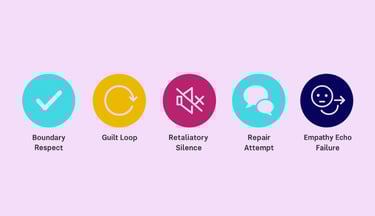
Empathy Echo Failure
Emotional acknowledgment is offered but not reciprocated.Loop Disruption
The exchange closes without mutual clarity or reassurance.Passive Control / Faux Civility
Polite language carries pressure or ambiguity.Missed Coordination
Logistical clarity remains unresolved despite engagement.
A dynamic may be informative without indicating harm.
Patterns matter more than isolated flags.
4. Metrics
Metrics provide orientation, not answers.
They help you notice:
balance or imbalance in participation
whether repair attempts are acknowledged
volatility in tone across the exchange
Metrics are intended to support human interpretation — not automation.
5. Healthy and Strained Patterns Can Coexist
Communication is rarely all one thing.
An exchange may show:
stabilizing behaviors alongside strain
care expressed alongside frustration
repair attempts mixed with missed attunement
EPI surfaces complexity rather than simplifying it.
6. What This Output Is Not
EPI does not:
diagnose individuals
assign intent
determine truth
predict outcomes
replace professional judgment
Seeing a pattern does not mandate a conclusion.
It shows where closer attention may be warranted.
Why This Approach Is Different
Most communication tools evaluate messages in isolation.
EPI models interaction as a relational system across time, integrating tone, response, and timing to surface trajectory before crisis becomes obvious.
The purpose is clarity — not certainty.
One Principle to Hold Onto
Tone acts.
Patterns form.
Trajectories emerge.
Seeing them early creates the possibility of prevention.



Connect
Explore
info@mindfulcommunications.io